
Advertisement
Americans waste about $200 billion yearly on unused subscriptions and impulse buys. This shows how small choices can quickly add up.
This article proves that spending awareness is a skill, not just a trait. By adopting simple money habits, you can boost your savings, cut down credit card debt, and stabilize your finances.
The guide is aimed at readers across the U.S. It connects personal finance basics to everyday actions. You’ll find clear budgeting advice, examples of common spending mistakes, and ways to curb impulse buys.
We break down the content into four sections. First, we explore the psychology behind spending. Then, we discuss goal-setting and tracking tools. Next, we cover budgeting methods and discipline. Lastly, we talk about community support like accountability and financial literacy resources.
Keep reading for tips, tools, and resources to enhance your money management skills. They’ll help you build lasting financial confidence.
Understanding Spending Awareness

Spending awareness is about keeping an eye on every dollar. It means noticing, recording, and thinking about each purchase. This way, you make sure your spending aligns with your values and goals.
Definition of Spending Awareness
It involves watching your spending, grouping expenses, and thinking about why you buy things. Regularly reviewing your spending patterns helps you understand your habits better. This turns vague habits into clear actions you can take.
Importance in Personal Finance
Spending awareness is key to managing your finances well. It helps with budgeting, paying off debt, saving for emergencies, and growing your wealth over time. By tracking your spending, you can save more, avoid unnecessary purchases, and make smarter use of credit.
Knowing how to manage your money is crucial. With basic knowledge of interest rates, budgeting, and saving, you can stick to mindful spending. This knowledge helps you make choices that support your long-term goals.
Being aware also changes how you shop. It stops you from buying things on impulse. This pause helps you make choices that align with your goals, not just short-term wants.
The Psychology of Spending
Spending is more than just numbers. It involves feelings, situations, and habits. Understanding how emotions affect our buying habits helps us spend more mindfully.
Emotional Triggers
Many things can make us want to spend money. Stress, boredom, and feeling left out are common. For example, a bad day might lead to shopping to feel better.
Boredom can make us scroll and buy things we don’t need. Seeing others’ lives on social media can make us want to buy to fit in.
Our brains get a quick dopamine rush from buying things. This rush is why ads and promotions work so well. They use images and urgency to make us buy.
It’s easy to see when someone is buying on impulse. They might buy clothes after a bad day or splurge at restaurants. These purchases are often about feeling good or showing success.
Impulse Buying vs. Rational Spending
Impulse buying is fast and emotional. It happens without thinking about the cost. Rational spending is slower and planned. It considers needs and goals.
Signs of impulse buying include not checking prices and buying quickly. Rational spending involves planning and comparing options.
There are quick ways to stop impulse buying. Try waiting 24 hours before buying something you don’t need. Use apps to set spending limits and remove saved payment info. These steps help us think before we buy.
| Trigger | How It Drives Buying | Quick Mitigation |
|---|---|---|
| Stress | Leads to retail therapy and comfort purchases | Pause and take a 10-minute walk before buying |
| Boredom | Prompts browsing and accidental cart additions | Schedule offline activities and remove shopping apps |
| Social Comparison | Drives purchases to signal status or fit in | Unfollow accounts that trigger envy and use lists |
| Reward-Seeking | Seeks short-term dopamine through purchases | Set savings rewards tied to goals instead of treats |
| FOMO | Creates urgency and fear-driven buys | Apply the 24-hour rule and check returns policy |
Knowing what triggers our spending gives us power. When we notice these triggers before buying, we can make better choices. This leads to more mindful spending and better money management in the long run.
Setting Financial Goals
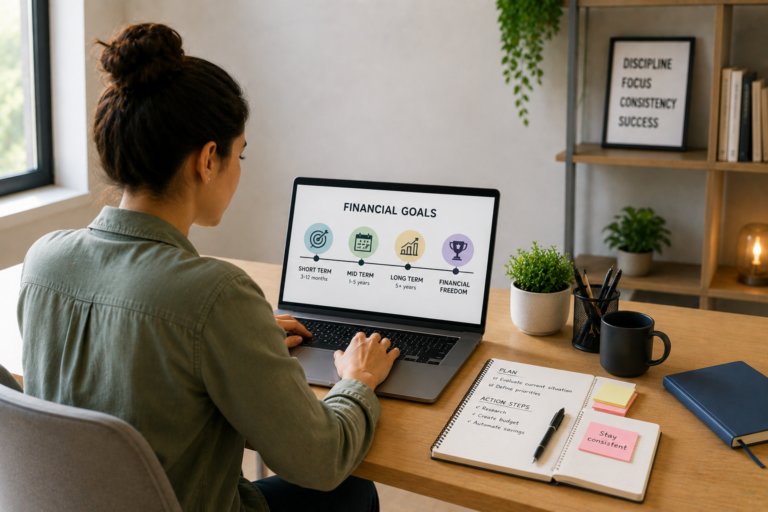
Clear targets guide our spending choices. Setting measurable aims makes choosing between now and later easier. This sharpens spending awareness and turns vague plans into real steps.
Short-term vs. Long-term
Short-term goals last from weeks to two years. Examples include starting an emergency fund, paying off credit cards, or saving for a trip. These goals fit into monthly budgets and help us decide what to do first.
Long-term goals last years to decades. Think about retirement, a home down payment, or college funds. These goals influence our choices on retirement accounts and investments.
SMART Goals Framework
The SMART method turns dreams into actions. Goals should be Specific, Measurable, Achievable, Relevant, and Time-bound. For instance, instead of “save more,” aim to “save $3,000 in 12 months by putting $250 from each paycheck into a high-yield savings account.”
Choose accounts and tools for each goal. Use high-yield savings for short-term needs at Ally Bank or Marcus by Goldman Sachs. For retirement, opt for a 401(k) or IRA. Set up automatic transfers to make saving a habit.
Make goals a part of your budgeting routine. Allocate monthly amounts to each goal, track your progress, and adjust as needed. Goals help us stay disciplined, make better cash flow choices, and clarify our financial decisions.
Tracking Spending Habits
Seeing your money in black and white makes it hard to ignore. Start with a quick audit, then pick a method that fits your life. Clear data leads to better decisions and stronger money management over time.
Tools for Tracking Expenses
You can use manual spreadsheets, the envelope method, or apps like Mint, YNAB, and Personal Capital. Bank apps help sort transactions automatically. Apps for scanning receipts make entry faster, and CSV exports let you analyze in Excel or Google Sheets.
Linking accounts gives you real-time views and faster categorization. Manual entry boosts privacy but requires more attention. Choose between linking and manual tracking based on convenience and security.
Analyzing Spending Patterns
Begin by grouping transactions into categories like housing, transportation, and groceries. Calculate monthly averages and flag recurring charges. Look for trends, like more dining out or small purchases.
Track monthly discretionary spend, savings rate, and debt-to-income ratio. Also, watch your average transaction size and frequency of small buys. A 30- to 90-day audit reveals your top categories and sets baselines.
After identifying baselines, mark adjustable versus fixed costs. Regular reviews turn tracking into lasting awareness. Simple budgeting tips help turn insight into action.
| Tool / Method | Best For | Pros | Cons |
|---|---|---|---|
| Manual Spreadsheet | Hands-on control | Full privacy, customizable categories | Time-consuming, risk of missed entries |
| Envelope Method | Cash-focused budgets | Visual limits, great for discretionary spend | Less practical for bills and online payments |
| Mint | Automatic tracking | Free, links accounts, alerts for bills | Ad-supported, privacy trade-offs |
| YNAB (You Need A Budget) | Active budgeting | Encourages goal-driven allocations | Subscription fee, learning curve |
| Personal Capital | Net worth tracking | Investment tools, clear portfolio view | Focused on wealth management, not granular budgets |
| Bank Categories (Chase, BofA, Capital One) | Quick view inside accounts | Auto-categorization, alerts, direct access | Category mistakes, limited customization |
| Receipt-scanning Apps | Receipts and cash purchases | Reduces manual entry, stores proof | Requires camera access, possible recognition errors |
Creating a Realistic Budget
Building a budget that works starts with clear steps and practical choices. Use spending awareness to turn past tracking into a plan that fits your income and goals. Keep this section handy when applying budgeting tips and refining your money management routine.
Budgeting Methods Overview
Zero-based budgeting assigns every dollar a job. It’s best for tight budgets and those who want strict control. Pros: precise, reduces waste. Cons: time consuming and rigid for variable incomes.
The 50/30/20 rule divides net income into needs, wants, and savings/debt. It’s ideal for beginners and busy households. Pros: simple and balanced. Cons: may not suit high-cost living areas or aggressive savers.
The envelope system uses cash categories for spending. It works well for discretionary categories like groceries and entertainment. Pros: physical limits reduce overspending. Cons: inconvenient with digital payments.
Cash flow budgeting focuses on timing—matching paychecks to bills and savings. It’s useful for freelancers and anyone with irregular income. Pros: prevents shortfalls. Cons: needs regular review and good tracking.
Prioritizing Needs vs. Wants
Start by calculating net income. List fixed expenses like rent, utilities, insurance, and minimum debt payments. Next, estimate variable costs using your tracked expenses. Allocate savings and debt payments before discretionary spending.
Define needs as essentials that keep you afloat: housing, groceries, basic transportation, and insurance. Mark wants as nonessential items such as streaming services, dining out, and brand clothing.
Ask a decision prompt before purchases: Will this harm my ability to meet essential obligations or delay a savings goal? Use that prompt to guide daily choices and keep spending awareness active.
Set spending caps for discretionary categories and give each household member a small “fun money” allowance to prevent feeling deprived. Schedule monthly or quarterly reviews to adjust caps for holidays or vacations.
Turn a spending audit into a monthly plan by moving tracked averages into budget lines. Example: if holiday gifts spike in December, divide that total by 12 and add a buffer to a savings line. This keeps seasonal costs from derailing routine money management and strengthens your overall personal finance habits.
Adjusting Spending Behavior
Small changes in spending can make a big difference. Being aware of your spending helps you find ways to save. You can cut costs without feeling like you’re missing out.
Strategies for Reducing Expenses
Try negotiating your bills for services like internet, cable, and insurance. Call companies like Comcast or State Farm to see if they have any deals. Look at what others offer and switch if it saves you money.
Cancel any subscriptions you don’t use. Check your streaming services, apps, and memberships every month. Plan your meals and cook in bulk to save on groceries and reduce waste.
Go for generic brands for everyday items. Use cashback apps and browser tools like Rakuten or Honey to find discounts. But be careful not to buy more than you need.
Focus on paying off debt by putting extra money towards the highest-interest loans. Choose a method that works for you, like the avalanche or snowball method. If it’s safe, consider using a balance transfer card to save on interest.
The Role of Discipline in Budgeting
Discipline is about building habits and using tools to stay on track. Set up automatic transfers to savings so you save first. Remove shopping apps to avoid buying things on impulse.
Link new budgeting habits to things you already do, like checking your phone after waking up. Use tools like public accountability and visual trackers to stay motivated.
Don’t get discouraged by setbacks. Allow yourself small treats to keep your budgeting plan realistic. If you slip up, learn from it and adjust your plan. This way, discipline stays flexible and effective.
Evaluating Essential vs. Non-Essential Purchases
It’s important to know the difference between needs and wants. This helps you make better budget choices and spend smarter. Use clear criteria to judge each purchase. Ask if it’s urgent, safe, or meets a legal need. Also, check if it fits your values.
How to decide quickly
Ask yourself a few questions. Is this purchase urgent for safety or a legal need? Will waiting harm my health or wallet? Does it align with my values or long-term goals? For example, a reliable car is essential, but a fancy trim is not.
Practical checklist for purchases
Before buying, make a quick checklist. Think about the cost, how often you’ll use it, and if there are cheaper alternatives. Use a cost-per-use estimate for things like clothes or tools. This helps you focus on what’s truly important.
Decision techniques that work
- 30-day rule for nonessential buys — wait a month, then reassess.
- Priority matrix — map urgency against impact to rank options.
- Wish lists and budgeting envelopes — earmark funds for larger one-time purchases.
For instance, fix a broken fridge before buying a new TV. Avoid impulse buys and save for important goals like an emergency fund or car repairs. These small changes lead to better spending habits and align with your financial goals.
Tools like wish lists and priority matrices help make choices clearer. Tracking these choices shows patterns in spending. This reduces regret over time.
The Impact of Lifestyle Choices
Everyday choices affect our monthly bills and long-term wealth. Small changes can lower spending while supporting health and the environment. This section guides you to spot cost drivers and adopt sustainable living habits.
How daily routines alter expenses
Where you live is key. Urban apartments often have higher rent, while suburban homes add commuting costs. A commuter in Atlanta or Los Angeles faces gasoline, maintenance, and tolls that add up fast.
Dining out and frequent travel balloon recurring costs. Weekly restaurant meals or weekend flights increase spending more than expected. Recognizing these patterns improves financial literacy and helps prioritize choices.
Managing lifestyle inflation
As income rises, spending tends to rise too. This lifestyle inflation can erode saving plans. One simple tactic is to automate a portion of each raise into savings or retirement accounts at Fidelity or Vanguard.
Set new income-based goals after each raise. This keeps mindful spending at the forefront and turns extra pay into long-term gains instead of immediate upgrades.
Practical tips for sustainable living choices
- Choose energy-efficient upgrades like LED bulbs and programmable thermostats to cut utility bills over time.
- Meal prep to reduce dining costs; making lunches at home saves both money and calories.
- Pick multi-use gear and buy quality when it lowers replacement costs, for example, a durable Patagonia jacket versus fast-fashion alternatives.
- Use public transit or carpool where possible to shrink fuel and parking expenses while supporting sustainable living.
- Adopt minimalism where it fits; fewer items mean less maintenance and fewer impulse buys.
Linking values to spending
Pause before purchases and ask if an item aligns with your priorities. This practice builds mindful spending habits and strengthens financial literacy. It helps you avoid regret purchases and keeps funds available for what matters most.
Choosing greener options often cuts household bills as well as carbon footprints. Public transit, reusable goods, and energy savings offer both environmental and financial returns.
Building an Emergency Fund
A reliable emergency fund gives you breathing room when life throws surprises at your finances. Small, steady steps build resilience and strengthen your financial safety net without upending daily life.
Importance of Financial Safety Nets
An emergency fund shields you from job loss, unexpected medical bills, and car repairs. It reduces the need to use high-interest credit cards or payday loans after a shock. Experts often recommend saving three to six months of essential expenses for most households. Adjust this target up or down based on job stability, number of dependents, and overall household risk.
Keeping a separate reserve improves spending awareness. When you can see the gap between monthly needs and available cash, you make clearer choices about cutting discretionary spending or raising your savings rate.
Steps for Establishing an Emergency Fund
Set a target based on monthly essential expenses. Start with a small milestone, like $1,000, then work toward one month of essentials, then three months. Breaking the goal into stages reduces overwhelm and encourages progress.
- Automate transfers to a separate high-yield savings account at banks such as Synchrony, Ally, or Marcus. Automation raises your savings rate without relying on willpower.
- Redirect windfalls like tax refunds or bonuses into the fund instead of spending them. Use side income or gig earnings to accelerate savings.
- Trim discretionary expenses temporarily and use round-up features in apps for micro-savings to boost contributions.
Keep the fund liquid but separate from your checking account to avoid accidental spending. Choose an account that balances yield with quick access. After any withdrawal, replenish the fund and periodically reassess the target if your essential expenses or household situation change.
Utilizing Cash Flow Management
Managing money means knowing when you get paid and when you spend. Good cash flow management helps you pay bills on time and avoid overdrafts. It also lets you save a little for unexpected expenses.
Freelancers and those paid on commission should track their income. This helps them plan for times when money is less regular.
Understanding cash flow basics
Cash flow is about when and how much money you get versus spend. Keep track of both your total income and what’s left after taxes and fees. Remember to note any irregular payments like taxes or insurance.
A simple monthly list of income and expenses helps spot problems early. This way, you can avoid big financial crises.
Techniques for positive cash flow
To make more money, consider side jobs, asking for a raise, or renting out unused space. Cut down on spending by reducing unnecessary costs and refinancing debt. Always keep some money aside for unexpected expenses.
Aligning bill due dates with paydays helps avoid overdrafts. Keeping a small amount in your checking account is also smart. Use sinking funds for regular but unpredictable costs like car repairs.
Use budgeting tools like apps or spreadsheets to track your money. Apps like EveryDollar and YNAB help forecast cash flow. Spreadsheets give you full control over your budget.
| Action | How it Helps | Tools or Examples |
|---|---|---|
| Create a monthly inflow/outflow worksheet | Reveals timing gaps and upcoming large expenses | Spreadsheet template, manual ledger |
| Set up sinking funds | Smooths predictable irregular costs and avoids surprise spending | Separate savings sub-accounts, YNAB categories |
| Align bill dates with paydays | Reduces overdraft risk and late fees | Auto-pay scheduling, bank bill calendar |
| Increase inflows | Creates positive cash flow for saving or debt reduction | Side gigs, rental income, negotiated raises |
| Reduce outflows | Frees up cash for priorities and emergency buffers | Refinance loans, cut subscriptions, spending reviews |
Good cash flow management leads to better spending habits. By forecasting and controlling your money, you reduce stress and make better choices. Use these tips to aim for steady, positive cash flow and improve your financial health.
Education and Resources for Better Spending Awareness
Starting your journey to spending awareness is easy with the right resources. Mix books, courses, and tools to build your financial knowledge. This will help you become more financially literate over time.
Books and Courses on Budgeting
Look for books that teach you how to manage money. “Your Money or Your Life” by Vicki Robin and Joe Dominguez focuses on budgeting based on values. “The Total Money Makeover” by Dave Ramsey helps you pay off debt and save for emergencies.
For a hands-on approach, try “You Need A Budget” by Jesse Mecham. It uses a zero-based budgeting method.
Combine reading with online courses. Websites like Coursera and Khan Academy offer free personal finance lessons. Local community college classes provide feedback and local insights.
Financial Apps and Tools
Choose apps that fit your needs. Mint helps you track all your accounts and sends alerts. YNAB focuses on budgeting and changing spending habits.
Personal Capital tracks your net worth and investments. Credit Karma monitors your credit and offers savings options like Ally or Marcus for emergencies.
Browser extensions like Honey and Rakuten can save you money with coupons and cash back. Always check the privacy policies and how they connect to your bank.
How to Choose and Keep Learning
Choose apps based on what you want to achieve. For daily budgeting, pick a budgeting app. For long-term growth, use an investment tracker. For debt, choose a debt plan.
Compare free and paid options and look for clear methods. Stay updated with newsletters from trusted sources like the Consumer Financial Protection Bureau and NerdWallet. Attend local workshops to learn more.
- Credibility: Choose authors and platforms with a good track record.
- Privacy: Always check how they protect your data before linking accounts.
- Fit: Let your goals guide you between books, apps, and courses.
Building a Support System
Spending awareness gets easier with friends. Sharing goals with someone you trust keeps you on track. Regular check-ins help you stay focused on your financial goals.
Finding Accountability Partners
Choose someone who gets your goals and gives helpful feedback. Set up regular meetings or share a goal chart. These steps turn good intentions into real actions, boosting your spending awareness.
Joining Financial Planning Communities
Explore online forums like Reddit r/personalfinance or Facebook groups on frugal living. Look for local meetups and community financial coaching. These resources offer valuable advice and support.
For big financial challenges, talk to a Certified Financial Planner. They can help you make smart financial decisions. Combining peer support with professional advice makes your financial plans stronger and more achievable.